"There's always water left at the bottom after the cycle finishes. And it's starting to smell — I don't even want to open the door anymore."
Miele dishwashers are engineered to exceptional tolerances, but even the best appliances require maintenance — and one of the most overlooked maintenance items on any dishwasher, Miele included, is the drain pump filter system. When a client in Astoria, Queens called to report that her Miele G6625SCi was leaving standing water at the bottom of the tub after every cycle and had developed a distinctly unpleasant smell, we had a strong suspicion about the cause before we even walked in the door.
What the Client Described
The client had owned the dishwasher for about four years. She'd noticed the drainage issue gradually — at first, just a small pool of water remaining at the bottom after cycles, which she'd assumed was normal. Over a few weeks, the standing water became deeper. The smell developed around the same time. By the time she called us, the cycle would run to completion but leave two to three inches of murky water in the bottom of the tub, and the interior smelled strongly of stagnant food water.
She hadn't received any error codes — the G6000 series will display fault codes for pump motor failures, but a simple blockage doesn't always trigger a code, especially in the early stages.
What We Found on Inspection
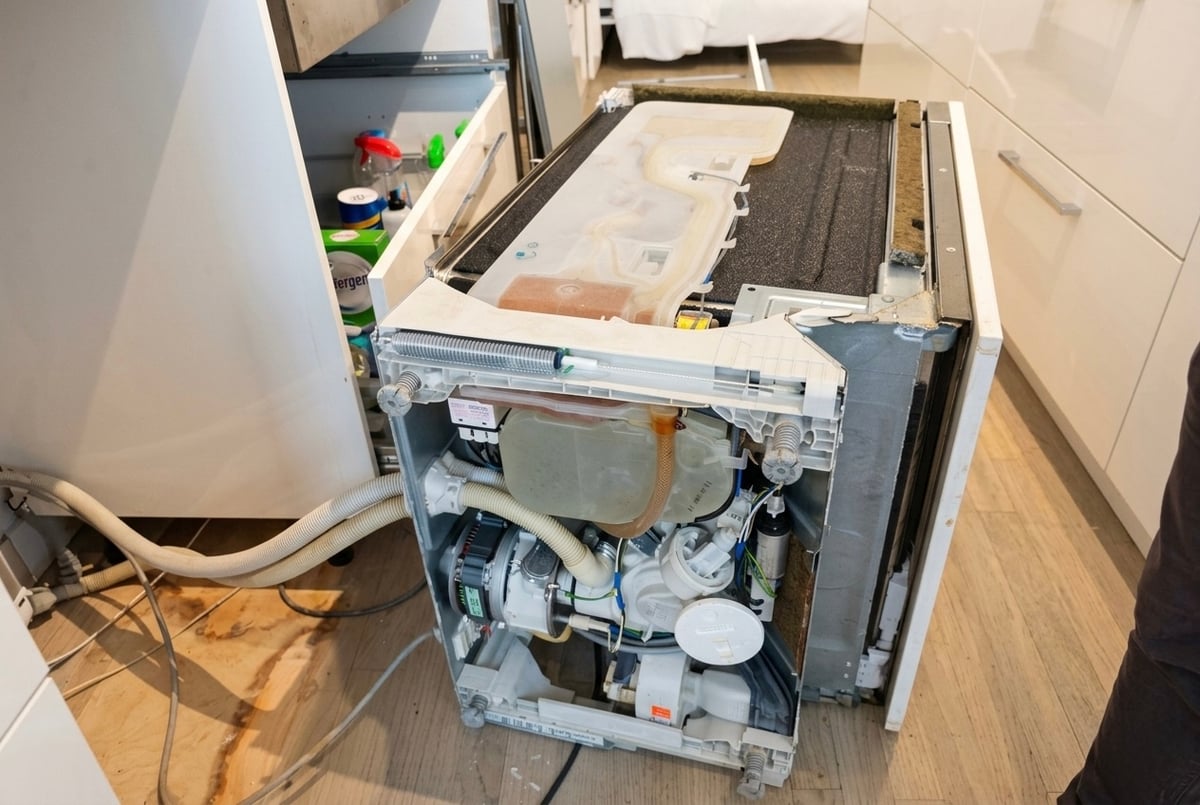
The technician started with the most likely culprit: the drain filter assembly. Miele uses a multi-stage filter system at the bottom of the tub — a coarse mesh filter, a microfilter beneath it, and a flat fine-mesh filter at the base. Together, they prevent food particles from recirculating into the wash water and from reaching the drain pump. On this unit, the filter hadn't been cleaned in the dishwasher's four-year life. The microfilter was almost completely blocked with compacted food debris — a dense mat of grease, fine food particles, and mineral scale that had built up to the point where water could barely pass through.
With that level of blockage, the drain pump was working against significant back-pressure. Most of the water was draining, but not completely, and the residual water sitting behind the filter was creating the odor. The technician cleared and rinsed the filter assembly thoroughly — a process that took about 20 minutes given how densely blocked it was.
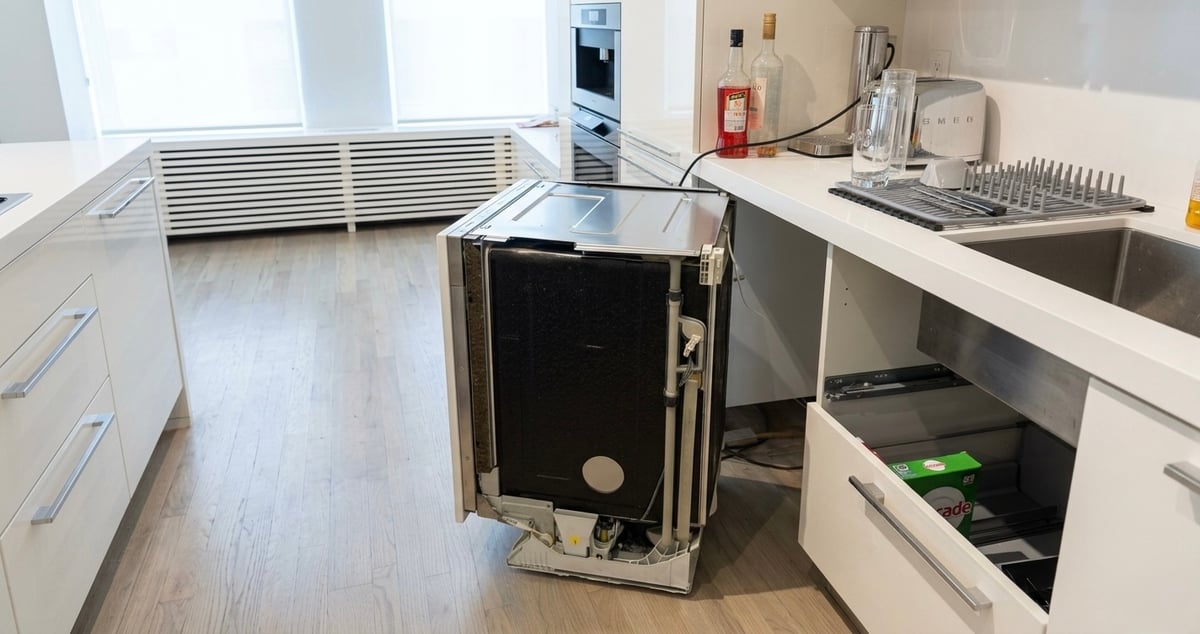
But there was a second problem. After clearing the filter, he ran a short drain cycle and watched the drain performance through the door. Drainage was better but still slower than it should be. He suspected a restriction in the drain hose. The unit is integrated behind a custom cabinet panel, which required partial removal to access the hose routing. Behind the cabinetry, the drain hose had developed a tight kink approximately 14 inches from the pump outlet — the hose had shifted at some point (likely during a previous appliance delivery or a cabinetry adjustment) and folded back against itself at an angle that was partially occluding the flow path. Not enough to stop drainage entirely, but enough to limit it significantly and contribute to the backup behind the filter.
The Repair
The filter assembly was cleaned with warm water and a soft brush, then reinstalled. The technician repositioned the drain hose behind the cabinetry, rerouting it in a smooth arc without kinks and securing it with a hose clip to the cabinet interior to prevent future shifting. He also inspected the drain pump impeller directly — accessible after removing the filter assembly — and confirmed it was clean and spinning freely with no debris lodged in the blades.
He then ran a complete standard wash cycle with the cabinet panel reinstalled, monitoring through the door. The cycle completed with zero standing water remaining and no error codes. A second cycle confirmed the same result. The interior odor was gone by the end of the first cycle.
Outcome & Maintenance Note
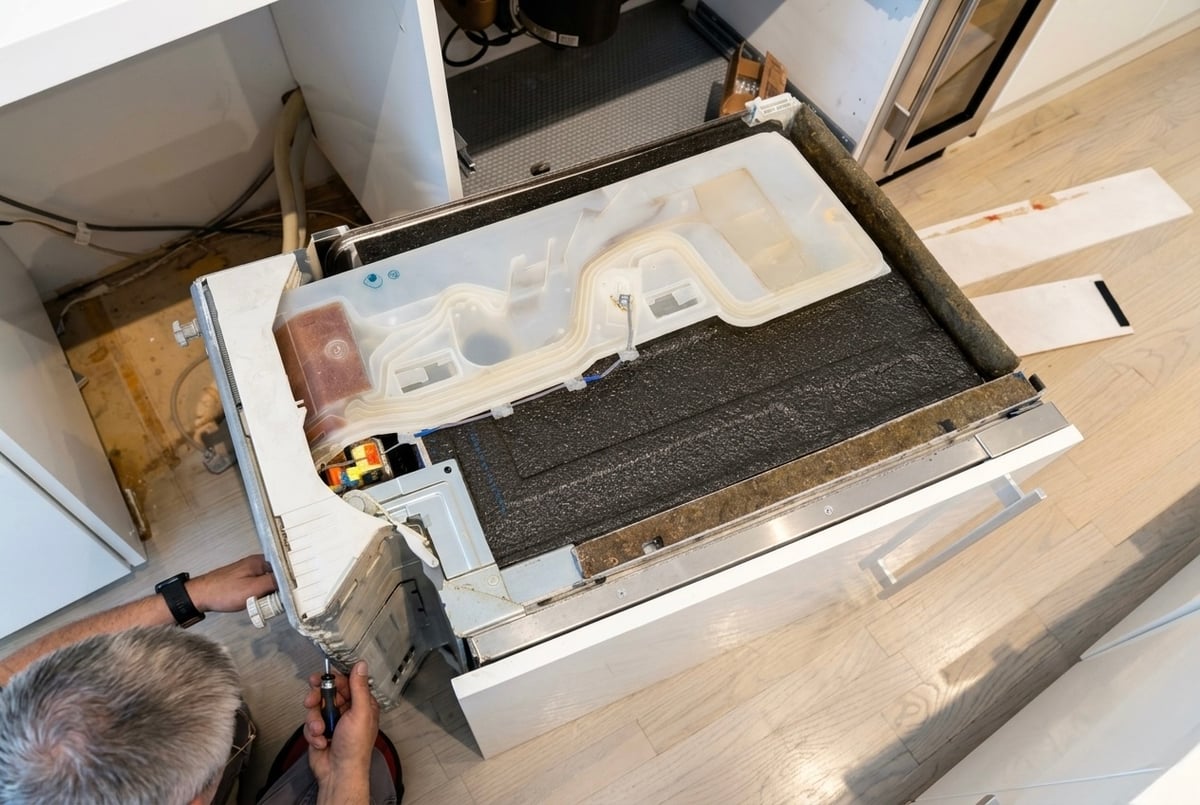
Total repair time was approximately 90 minutes, including the cabinetry access work. The client was pleased — and surprised that such a significant drainage problem came down to maintenance and a hose position issue rather than a pump failure.
After the second cycle completed with a perfectly clean, dry tub, the client laughed and said she'd been dreading a major repair bill. The fix was maintenance and a repositioned hose — but left another year, the pump motor would have been next.
One note we leave with every Miele owner after a drainage call: clean the filter assembly monthly. It takes under five minutes and prevents the vast majority of drainage problems we see. The filter is at the bottom of the tub — twist it out, rinse it under the tap, put it back. That's it.
If your Miele dishwasher isn't draining or has developed an odor anywhere in Queens or NYC, call us at +1 (212) 470-4787. We carry Miele drain components on the van and can usually resolve drainage issues in a single visit.