"I cleaned the range yesterday and now two burners just click and click — they won't light. Did I break something?"
We've seen this particular failure pattern more times than we can count, and it almost always follows the same story: the homeowner gives their Viking range a thorough cleaning, and within a day or two, one or two burners start clicking continuously even when the knobs are off. Sometimes the burners ignite eventually. Sometimes they just click indefinitely and refuse to light at all.
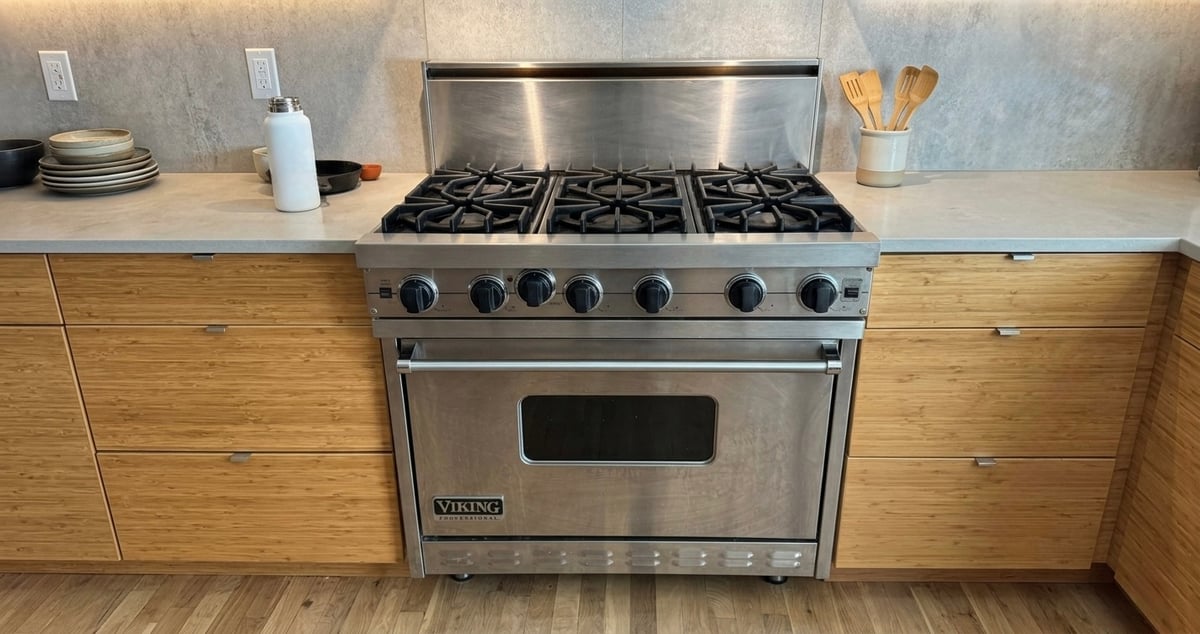
That's exactly what happened with a client in Park Slope, Brooklyn, who called us after her Viking VGIC6486GSS — a six-burner 48-inch dual-fuel range — started misbehaving the day after she'd cleaned it ahead of a holiday gathering. Two burners, the front-left and the rear-right, would click endlessly without igniting. The other four worked fine.
What the Client Described
She'd cleaned the range thoroughly, lifting off the grates and burner caps, wiping down everything with a damp cloth and a small amount of dish soap solution. She was careful, she said — she'd done it the same way a dozen times before. But this time, the next morning, the clicking started. She assumed she'd just left things a little wet and waited a day. No change. By the third day, she called us.
She confirmed the clicking happened even when the range was completely off — as soon as she turned on the range hood or sometimes even just walked past, she'd hear a sporadic click from one of the problem burners. Both burners would occasionally light if she tried long enough, but the process took 30 to 60 seconds of continuous clicking, which is not normal. Viking burners should ignite in one or two sparks.
What We Found on Inspection
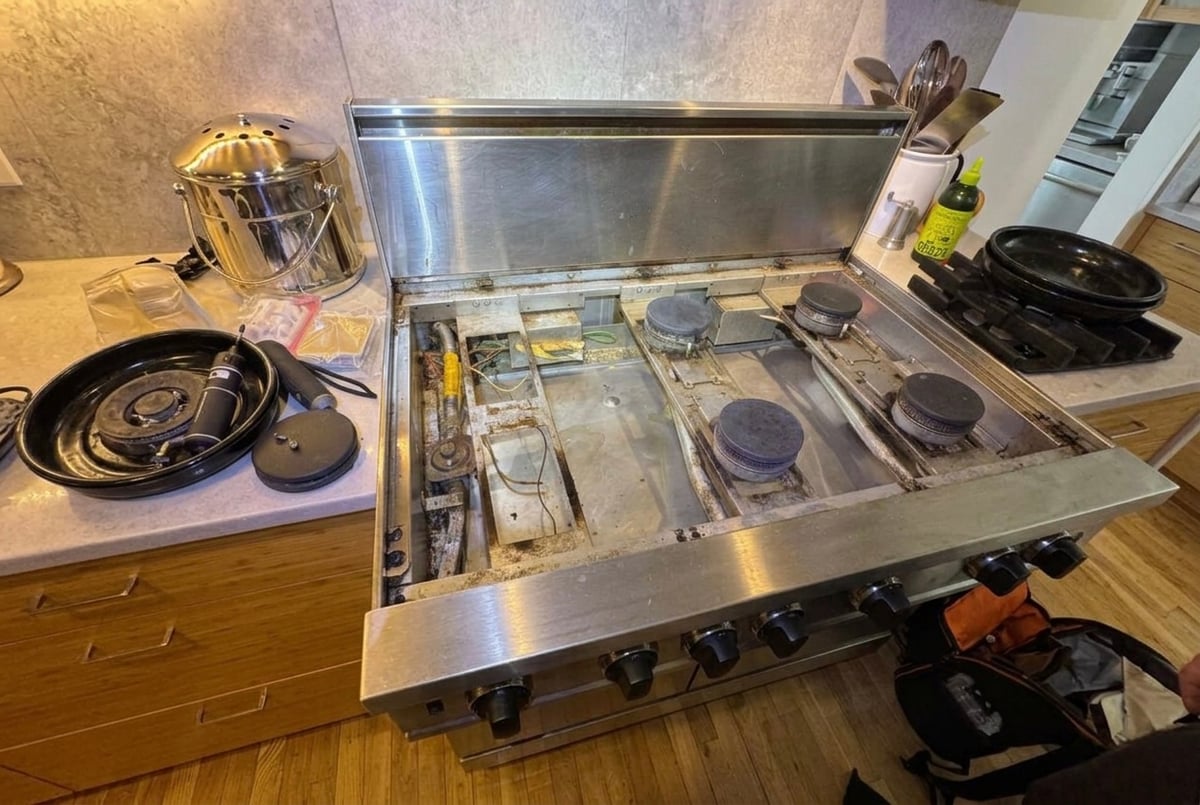
The technician started by removing the burner caps on the two problem burners and inspecting them visually. The front-left cap had a hairline crack running from the edge toward the center — barely visible to the naked eye, but clearly there when examined under a flashlight at an angle. A cracked burner cap allows moisture and food debris to migrate directly into the igniter electrode recess, which sits just below the cap. Once that pathway exists, any moisture at all — humidity, steam from cooking, even a slightly damp wipe — can cause the electrode to arc continuously against the cap itself rather than across the correct gap to the burner.
The rear-right cap had a different issue. The cap wasn't cracked, but it was warped along one edge from heat cycling — it no longer sat flush on the burner head. Again, the gap between the electrode and the cap surface was wrong, causing erratic sparking behavior.
Beyond the caps, the technician opened the igniter module housing beneath the cooktop surface. The module for the two affected burners showed visible moisture residue — a white mineral deposit where water had seeped in and evaporated, leaving behind a conductive film on the module circuit board. This film can cause the module to trigger random spark cycles even without any input from the knob, which explained the clicking the client heard when the range was supposed to be off.
The Repair
The technician replaced both cracked and warped igniter caps with new OEM Viking parts. He then carefully cleaned the igniter module contacts using isopropyl alcohol and a soft brush to remove the mineral deposits, then reseated the module with all connectors fully engaged. To ensure the module had dried completely, he ran the range for a few minutes with the burner caps off to allow any residual moisture to evaporate before replacing the caps.
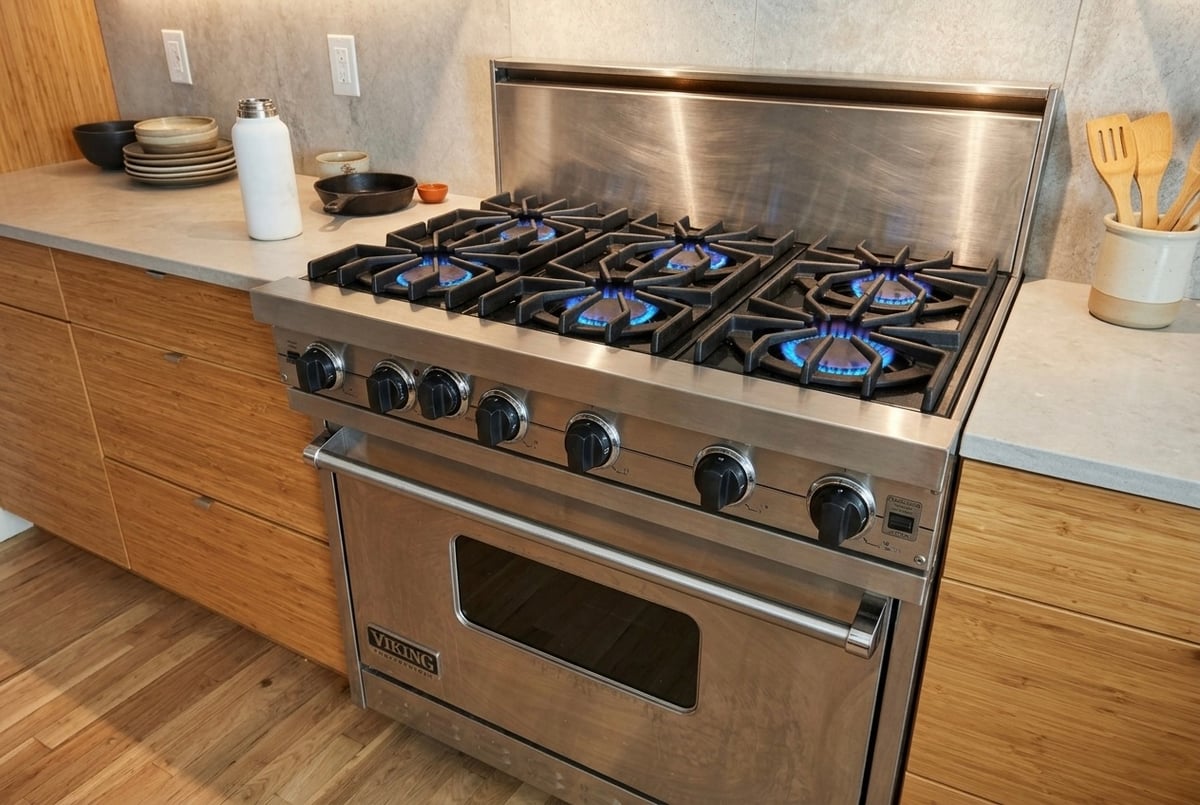
After reassembly, both burners ignited on the first spark — clean, immediate, the way a Viking should work. He tested all six burners repeatedly to confirm no phantom clicking from the other four, then verified the oven ignition as well. Everything operated normally.
Outcome & Cleaning Tips
Total repair time: about 90 minutes. The client was relieved it wasn't something more serious — she'd been worried the igniter module needed full replacement, which would have been a considerably larger job.
One thing we always tell Viking owners after a job like this: when cleaning the burner area, lift the caps off and let everything air-dry completely before you cook again. A hair dryer on low works well. Inspect the caps while they're off — hairline cracks are easy to spot under a flashlight and cheap to fix proactively. The service call after a crack turns into a moisture problem is not cheap.
Viking range igniter problems after cleaning are almost always fixable in a single visit. If your burners are clicking or refusing to light anywhere in Brooklyn or NYC, call us at +1 (212) 470-4787. We carry Viking igniter parts on the van and can usually have you cooking the same day.