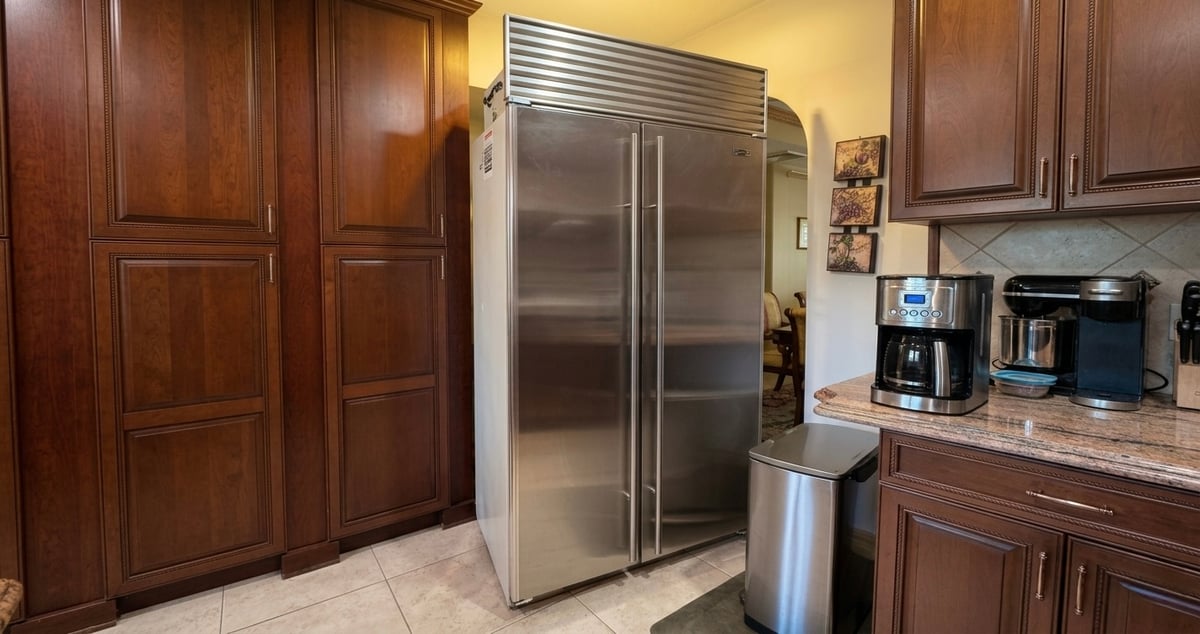
"The freezer feels a little cold but the fridge is completely warm. I have people coming over tonight — can someone come today?"
The call came in on a Tuesday morning. A homeowner in Tribeca, Manhattan, woke up to find her Sub-Zero 648 built-in refrigerator no longer cold. The freezer still felt slightly cool, but the fresh food compartment had climbed to nearly 60°F overnight. She had a dinner party that evening and was understandably stressed. We dispatched a technician within two hours.
What the Client Described
The client said she hadn't noticed anything unusual in the days leading up to the failure — no strange noises, no frost buildup on the back wall, no warning lights on the control panel. The unit had been running without issue for about nine years. The Sub-Zero 648 is a 48-inch built-in column refrigerator, a flagship model, and one of the most reliable units on the market. Which made this failure all the more puzzling at first glance.
She did mention, now that she thought about it, that the refrigerator had felt "a little off" for about a week — not quite as cold as usual, but nothing she flagged as a problem. That detail turned out to be important.
What We Found on Inspection
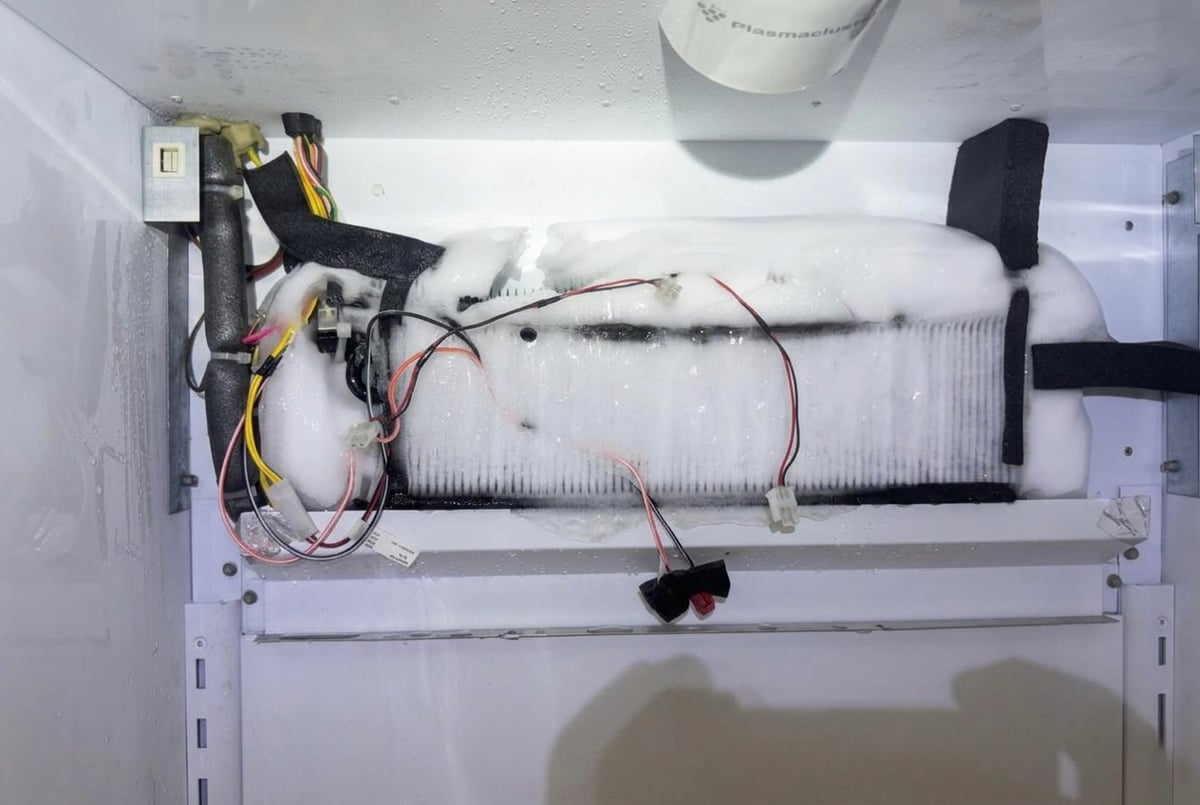
The technician pulled the unit away from its cabinet enclosure to access the rear panels. The first thing he checked was the evaporator coil compartment, located in the back of the fresh food section. As soon as he opened the access panel, the problem was obvious: the evaporator coils were completely encased in a solid block of ice — not the light frost that's normal, but a full ice-over that had completely obstructed airflow.
An iced-over evaporator tells one of two stories: either the defrost heater has failed and can no longer melt the frost that accumulates during normal operation, or the defrost thermostat has failed and isn't signaling the heater to turn on. In this case, the technician tested the defrost heater with a multimeter and confirmed it had burned out — open circuit, no continuity. The heater element itself had a visible burn mark where it had failed.
With the coils completely iced over, airflow from the evaporator to the fresh food section was blocked. The compressor and freezer section could still do their job, which is why the freezer felt marginally cool, but the fan that circulates cold air into the refrigerator compartment — the evaporator fan motor — had also seized. Running against the ice block had burned out the motor bearings. When the technician tried to spin the fan blade by hand, it turned stiffly and then stopped. The motor was dead.
The Repair
The technician had both the defrost heater assembly and the evaporator fan motor for the Sub-Zero 648 in stock on the service van — these are among the most common failure parts for this model and we keep them on hand specifically for same-day repairs. He carefully defrosted the evaporator coils using a heat gun, working methodically to avoid damaging the fins. Once the coils were clear, he replaced the burned-out defrost heater with a new OEM-spec unit and swapped the seized fan motor.
After reassembly, he ran the unit through a full defrost cycle manually to confirm the new heater activated and cycled off correctly at the thermostat setpoint. The evaporator fan spun up immediately and quietly. He then monitored the refrigerator temperature over 45 minutes — it dropped from ambient to 38°F and held steady. The freezer reached -3°F and stabilized.
Outcome
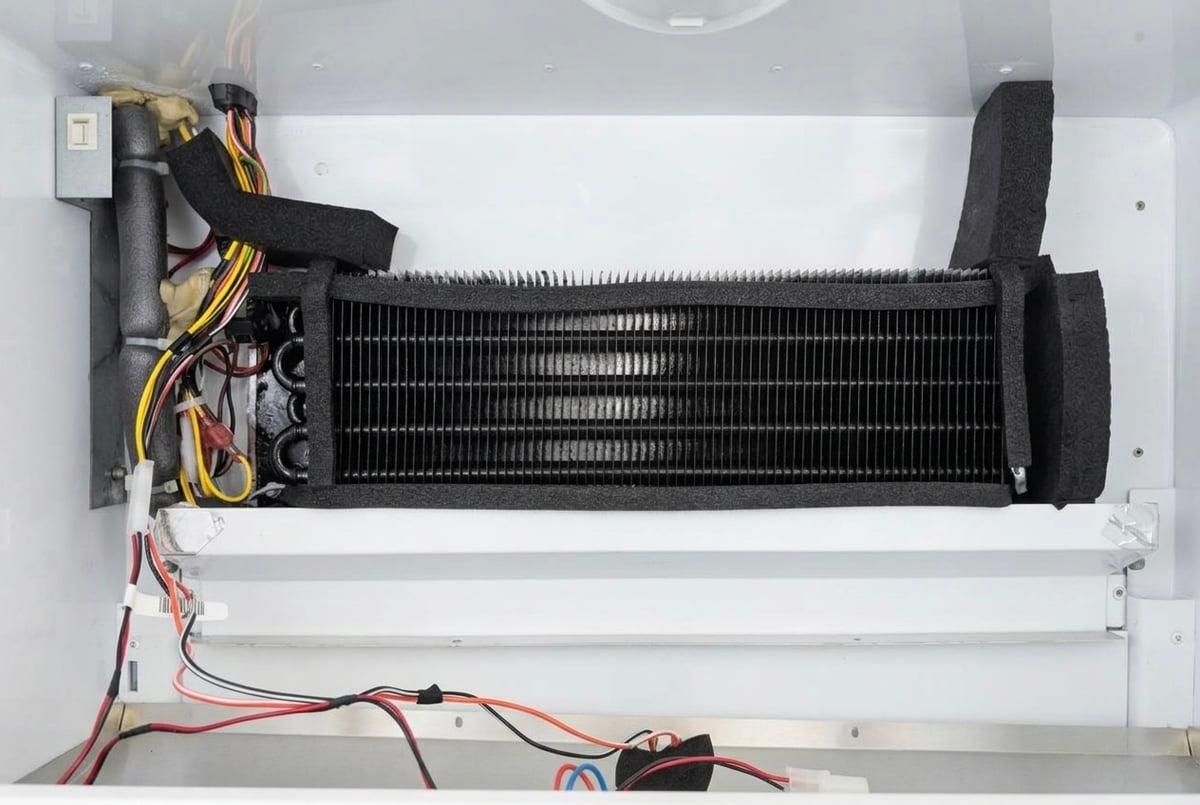
Total repair time was approximately two and a half hours, including defrost time. The client was back in operation well before her dinner party. We documented the repair in her service record and recommended she consider a proactive defrost system inspection in 18–24 months, as the defrost timer and thermostat on the 648 are now at typical end-of-life age for this unit's vintage.
If your Sub-Zero refrigerator is running but not cooling the fresh food section properly — especially if the freezer seems fine — a blocked evaporator from a failed defrost heater is the most likely cause. Don't wait for a complete failure. The longer a seized evaporator fan runs against an ice block, the more damage it does to the motor bearings. Early diagnosis saves a second repair bill.
Facing the same problem? We service Sub-Zero refrigerators across Manhattan and all five NYC boroughs. Same-day appointments available. Call us at +1 (212) 470-4787 — we'll have a technician at your door within hours.