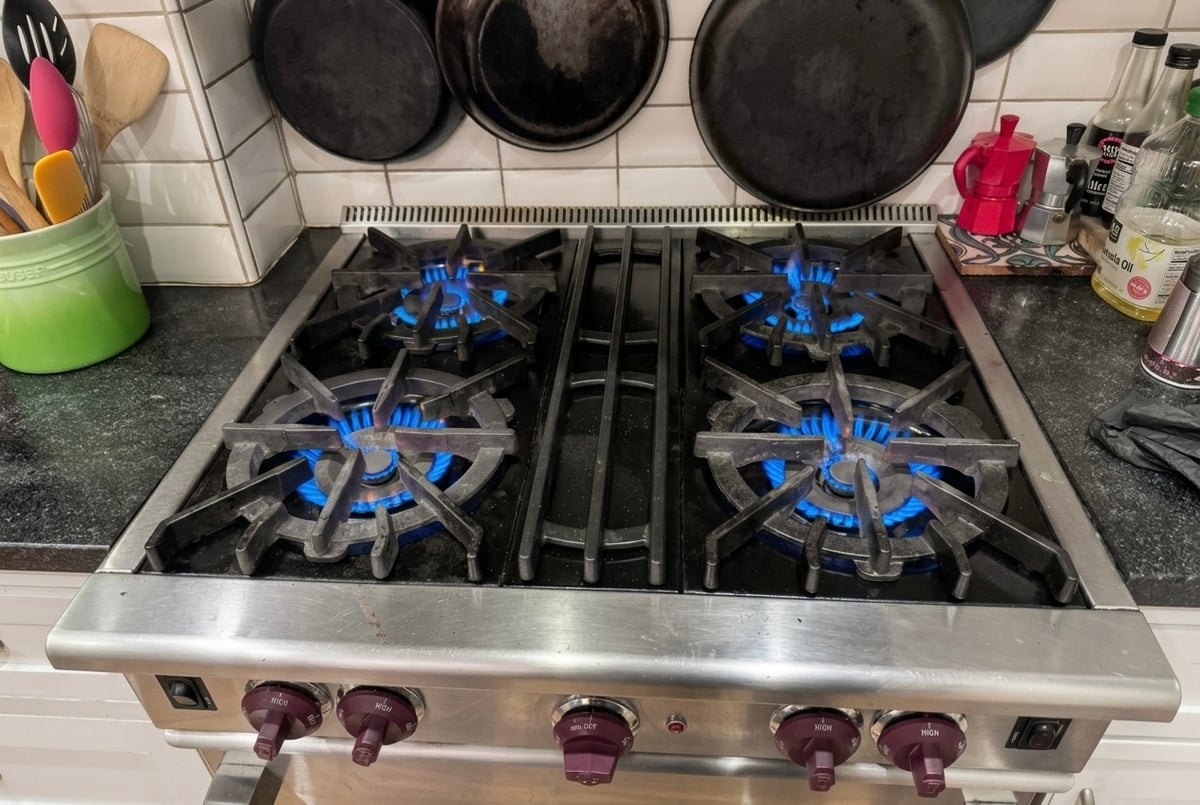
"One burner has been weak for months. I just stopped using it and used the others. Is it worth fixing or should I just leave it?"
A weak flame on a gas burner is one of those problems that's easy to ignore — the burner works, technically, so it's tempting to just use a different burner and move on. But on a premium cooktop like a Thermador, a weak burner isn't just an inconvenience. It's usually a sign of a specific, fixable problem, and letting it go can sometimes lead to a bigger issue down the line. A client in Williamsburg, Brooklyn learned this firsthand after letting a weak burner on his Thermador SGSX365FS star burner cooktop go unaddressed for several months.
What the Client Described
The client said the right-rear burner had been producing a noticeably weaker flame than the others for about four months. At full power, it looked like a medium setting on the other burners — lower, less intense, and uneven across the star burner pattern, with some ports producing flame and others producing almost none. He'd tried cleaning the burner cap himself with a toothbrush and warm water, which helped briefly, but the issue returned within a week. He also noticed the flame color was more orange than the crisp blue he was used to seeing on the other burners — a sign of incomplete combustion from insufficient gas flow.
What We Found on Inspection
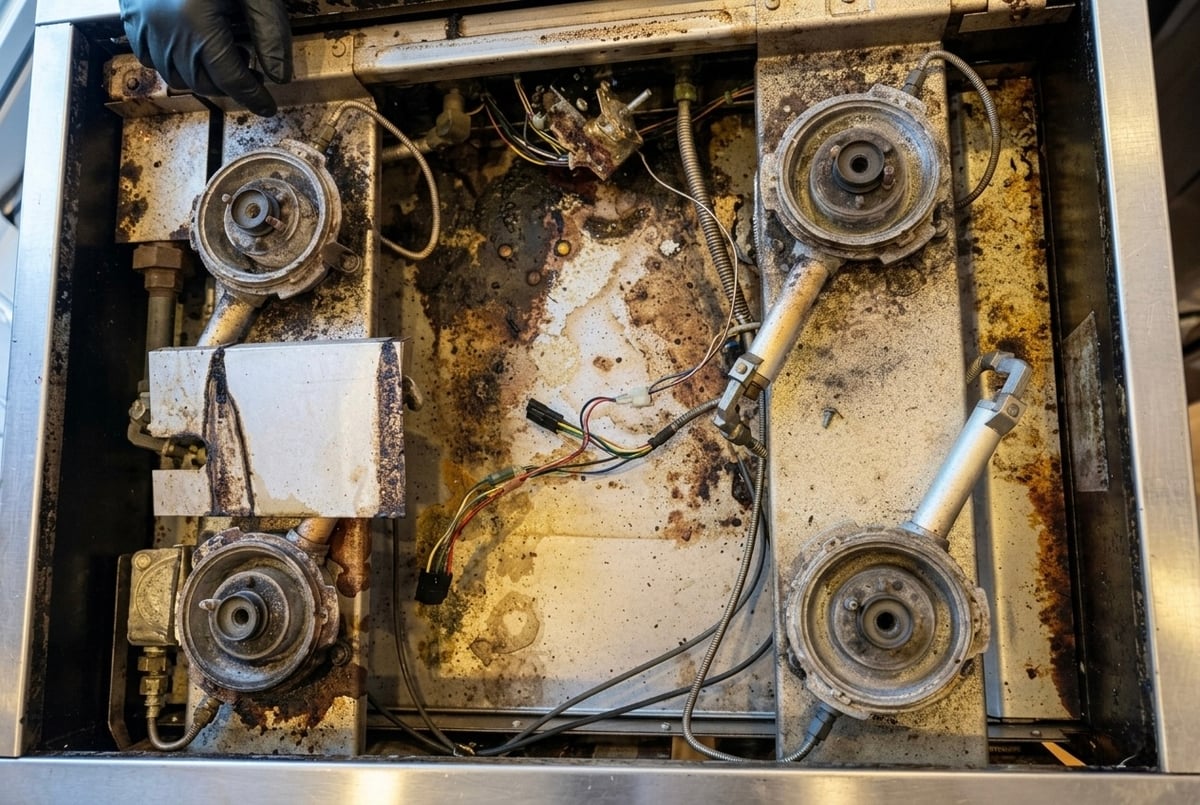
The technician removed the burner cap and burner head to access the orifice — the precision-machined brass fitting at the base of the burner that meters gas flow. Thermador star burners are known for their even heat distribution, but the orifice ports and the burner cap ports must both be completely clear for that performance to hold. On this unit, the orifice had a significant carbon deposit blocking approximately 40 percent of its opening. Carbon buildup in gas orifices is caused by cooking debris — oils, food particles, and liquid boilovers — falling or migrating down through the burner and baking onto the orifice surface over time. A toothbrush cleaning of the cap won't reach the orifice, which explained why the client's cleaning efforts only helped temporarily.
The second problem was the burner cap itself. On inspection, the cap was visibly warped — one section of its rim had lifted away from the burner head seating surface by nearly a millimeter. This gap disrupted the air-to-gas mixture at those ports, which was causing the uneven flame pattern the client described. Thermador star burner caps are precision-cast components, and even a small distortion from heat cycling — particularly if the burner had been running in this compromised state — can prevent the cap from seating correctly. Once a cap is warped, no amount of cleaning will restore proper performance.
The Repair
The technician cleared the orifice blockage using a proper orifice cleaning tool — a fine wire brush designed specifically for this purpose. Using any other tool risks enlarging or distorting the orifice opening, which would permanently alter the gas flow rate and require orifice replacement rather than cleaning. With the correct tool, the carbon deposit was removed cleanly in about ten minutes. He also cleaned the burner head ports — the small holes around the perimeter of the burner head through which gas flows before passing the cap — using compressed air and the same cleaning tool.
The warped burner cap was replaced with a new Thermador OEM part. These caps are specific to the star burner configuration of the SGSX365FS and can't be substituted with generic components. With the new cap seated correctly on the cleaned burner head and clear orifice, the technician lit the burner and observed the flame pattern. All ports were producing even, steady blue flame. At full power, the burner matched the output of the other five burners on the cooktop — the same strong, even star pattern the cooktop was designed to produce.
He tested the burner across the full range of power settings, from simmer to high, confirming even flame modulation at every level. He also checked the other burners' orifices for early-stage carbon buildup — two showed light deposits, which he cleaned proactively while he had the cooktop disassembled.
Outcome
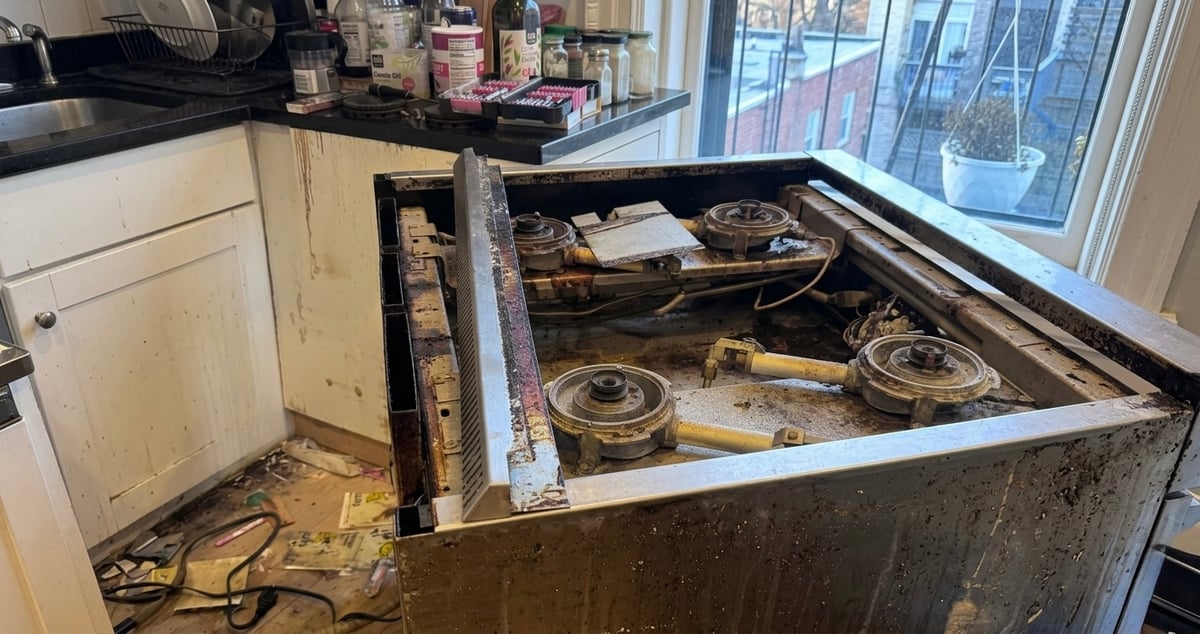
Total repair time was approximately 75 minutes. The client said the difference was immediately obvious — the repaired burner looked and sounded like it had when the cooktop was new. Then he asked the question we hear often: "Was it worth calling, or could I have just kept ignoring it?" The answer was on the cooktop in front of him — the two other burners we'd cleaned proactively had early-stage carbon buildup that, left another season, would have become the same problem.
For Thermador star burner owners: a weak or uneven flame is never just cosmetic. The longer a clogged orifice runs, the more carbon bakes in — and a carbon-damaged orifice that can't be cleaned requires full replacement, which is a considerably more expensive job. At the first sign of uneven flame, call it in.
We service Thermador cooktops across Brooklyn and all NYC boroughs. Same-day appointments available. Call us at +1 (212) 470-4787 and we'll have a technician with the right parts at your door.